My mother did not cry at funerals. She cried at kitchen tables.
She cried the morning I told her I was leaving for university — not sad tears, she said, just overwhelmed ones. She cried the first time she held my daughter, her granddaughter, and could not speak for a full two minutes. She cried once over a telephone call with her own mother, long after I had gone to bed, and I heard it through the wall — that particular quiet crying that adults do when they think no one is listening.
She died on a Thursday in March, three years before my daughter was old enough to remember her.
I have spent every Mother’s Day since then somewhere between gratitude and grief — grateful for what I had, grieving what my daughter never will. I know I am not alone in this. Mother’s Day is, for many people, the most complicated Sunday of the year. It sits in the middle of the church calendar like a test. Some people pass it easily. A lot of us do not.
What I found, in the years of searching that followed her death, was that the Bible is far more honest about motherhood than any Mother’s Day card I have ever read. It does not only celebrate the tender and the triumphant. It holds the complicated and the grieving with the same care. It gives us Hannah weeping in the temple for a child she did not yet have. It gives us Mary watching her son die. It gives us Naomi who asked to be called Bitter because she had lost too much.
And woven through all of it is a God who describes his own love for his people in the language of a mother. Not once. Repeatedly. As if he wants to make sure we understand that this kind of love — warm, fierce, body-and-soul, unreasonable in its devotion — is as close to the divine heart as any human language can get.
This guide is for every person who will spend Mother’s Day in some version of complicated. And for those who will spend it simply, gratefully, joyfully — there is more than enough here for you too.
1. What the Bible Really Says About Mothers
The Hebrew Foundation of Motherhood
The Hebrew word for mother is em (Strong’s H517) — one of the oldest and simplest words in the language. But its use in the Old Testament goes far beyond biology. Em is used for the biological mother, the nurturing figure, the one who gives life, and also as a title of honour and authority. Deborah, the great judge and prophetess, is called “a mother in Israel” (Judges 5:7) — a title of leadership and protective strength, not just tenderness.
Racham (H7355) is the Hebrew word for deep compassion or mercy — the kind that is visceral, body-level, involuntary. It is the word used in Psalm 103:13: “As a father has compassion on his children, so the Lord has compassion on those who fear him.” But the root of racham is rechem — womb. The deepest mercy in the Hebrew language is womb-mercy. God’s compassion, at its root, is described in the language of a mother’s body.
Em and racham together build the Hebrew theology of motherhood: it is not merely a relational role. It is a theological category through which God reveals his own nature. When Isaiah 66:13 reads “As a mother comforts her child, so will I comfort you”, God is not reaching for the closest available metaphor. He is pointing to something in maternal love that most accurately mirrors what he is trying to show.
The Greek Dimension of Maternal Love
The New Testament honours motherhood most directly in the person of Mary, whose magnificat in Luke 1:46-55 is one of the greatest theological poems ever written — composed by a young mother in the weeks after she discovered she was pregnant. Makarizosin (G3106) — the word used when Elizabeth says “all generations will call you blessed” — means to be declared supremely happy and honoured. The New Testament’s most extended act of maternal honour is given to a woman who was pregnant, unmarried, and facing enormous social risk.
Paul uses the language of motherhood in Galatians 4:19 when he writes: “My dear children, for whom I am again in the pains of childbirth until Christ is formed in you.” He applies maternal labour imagery to his own ministry — the agony, the patience, the longing for the one you are carrying to fully emerge. Odin (G5604) — birth pangs — is the word he chooses. Ministry that is serious, Paul says, feels like labour.
Trophon (G5160) appears in 1 Thessalonians 2:7 where Paul describes his own pastoral care: “We were like a nursing mother caring for her own children.” The image is of the most tender, close, body-to-body nurture available — and Paul applies it to his own apostolic work. In the New Testament, mothering is not confined to women. It is a quality of love that the whole church is called to embody.
From Old Covenant to New Covenant
The Old Testament establishes the commandment to honour your mother alongside honouring your father — it is the fifth commandment and the first with a promise attached (Exodus 20:12). The Torah surrounds this with practical provisions for widowed mothers, economic protections for women with children, and a theology of family that places maternal relationships at the centre of covenantal life.
The New Testament fulfils this in Christ’s own actions. From the cross, with everything else going on, Jesus looks down and makes specific provision for his mother — entrusting her to the care of his beloved disciple (John 19:26-27). In the middle of the greatest moment in human history, Jesus had time for his mother. This is not a footnote. It is a statement about the weight God places on this relationship.
2. Every Type of Mother Honoured in Scripture
The Faithful Mother Who Prays Without Ceasing
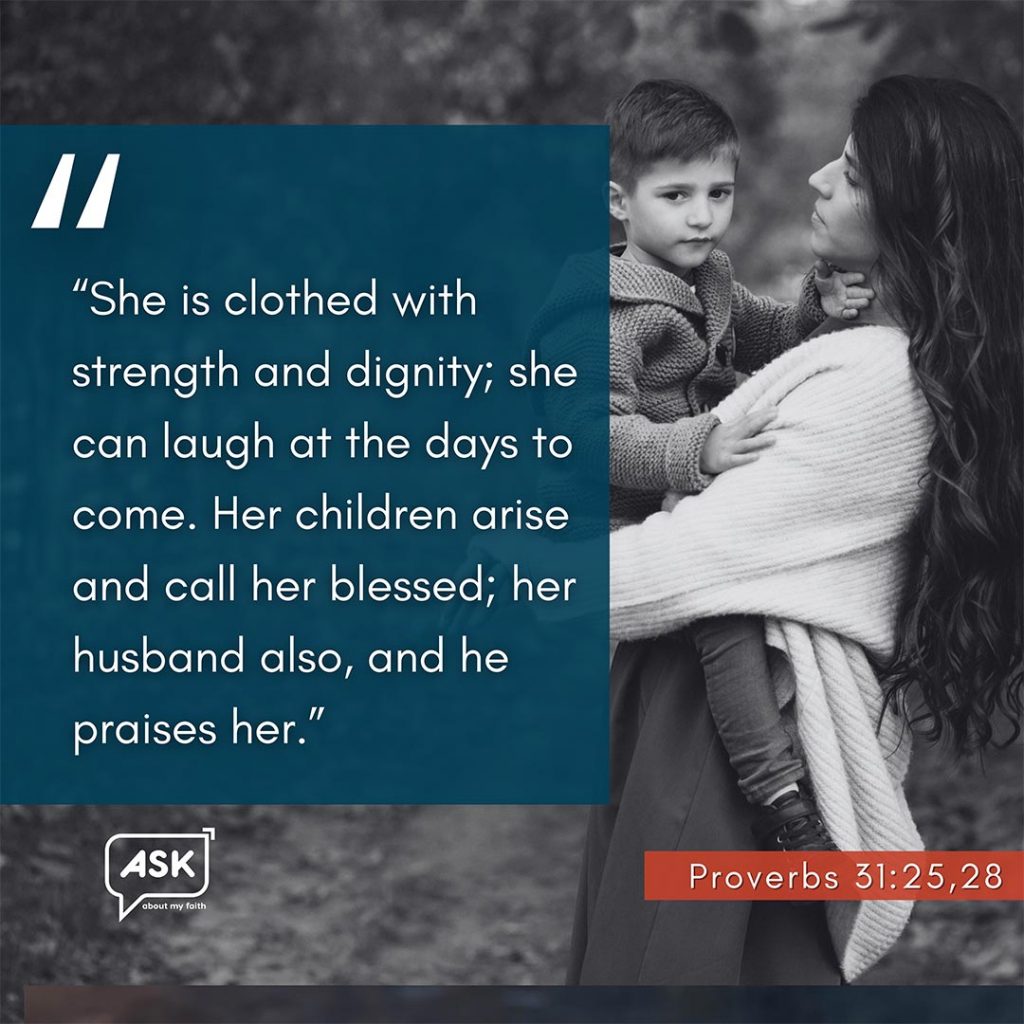
“She is clothed with strength and dignity; she can laugh at the days to come.” — Proverbs 31:25, NIV
My own mother was not a dramatic woman. Her faith was quiet and consistent — the kind you do not fully recognise until you are watching it from the other side of her absence. Proverbs 31 is not a checklist for women to live up to. It is a poem of honour, written by a son recording his mother’s teaching about what a worthy woman looks like.
Practical Application: If your mother is still living, call her this week and read her one verse from Proverbs 31. Tell her which one reminds you of her.
The Grieving Mother — Hannah and Rachel
“In her deep anguish Hannah prayed to the Lord, weeping bitterly.” — 1 Samuel 1:10, NIV
Hannah is one of the most honest portraits of a woman in desperate longing for motherhood in all of Scripture. She does not pray politely. She prays in such distress that the priest thinks she is drunk. God does not correct her passion. He answers it. For every woman who has prayed and wept over a child not yet born, not yet conceived, or never to arrive — Hannah was there first.
Practical Application: If Mother’s Day is a day of longing rather than celebration for you, read 1 Samuel 1 and let Hannah’s honesty before God be permission for your own.
The Courageous Mother — Jochebed and Moses
“By faith Moses’ parents hid him for three months after he was born, because they saw he was no ordinary child, and they were not afraid of the king’s edict.” — Hebrews 11:23, NIV
Jochebed placed her infant son in a basket in the Nile rather than hand him to Pharaoh’s soldiers. She did not know what would happen. She trusted that keeping him alive in an uncertain situation was better than surrendering him to a certain death. Her act of faith is included in the Hebrews 11 honour roll — alongside Abraham and Moses himself. Courage in motherhood is a biblical theme, not a modern invention.
Practical Application: Think of one courageous act your mother made on your behalf that you have never told her you noticed. Tell her — or, if she is gone, write it down.
The Complicated Mother — Rebekah and Others
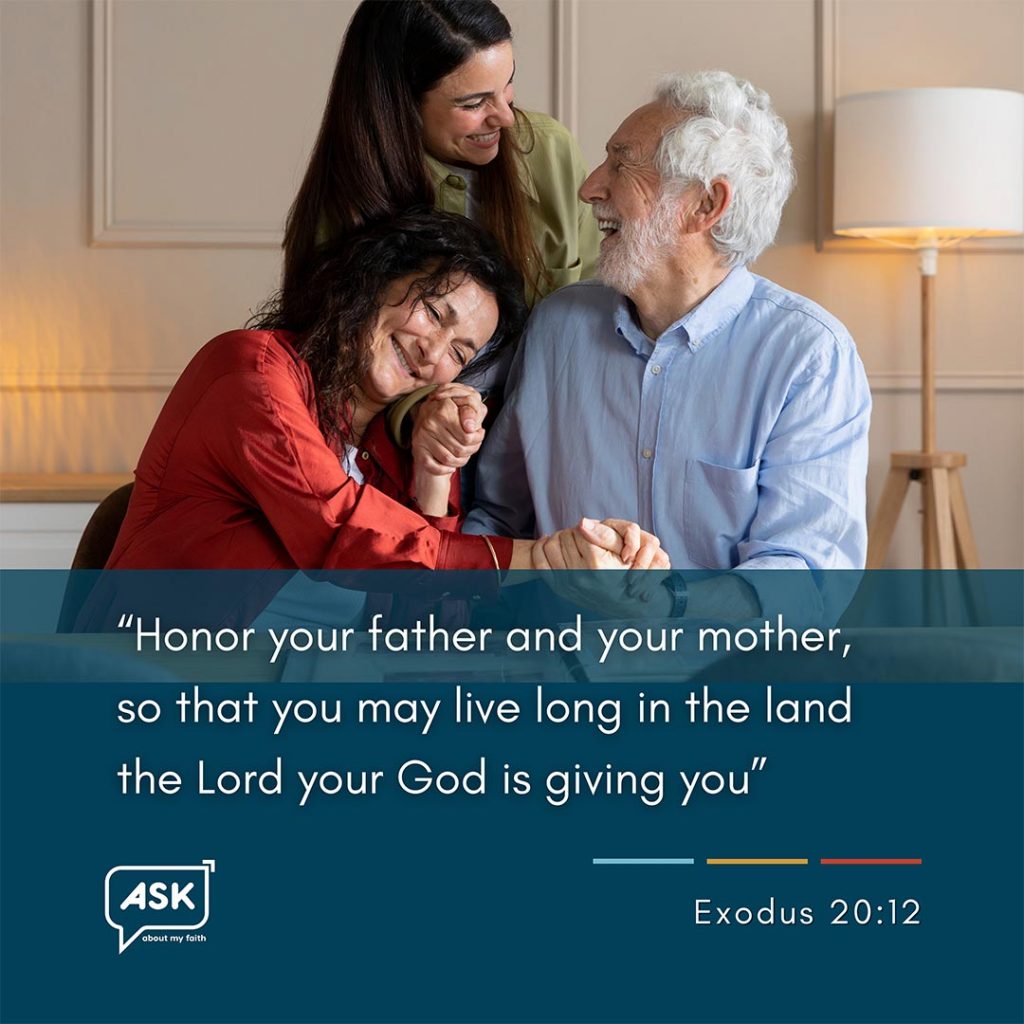
“Honour your father and your mother, so that you may live long in the land the Lord your God is giving you.” — Exodus 20:12, NIV
Scripture does not only give us idealised mothers. Rebekah played favourites and helped deceive her husband. Lot’s daughters made devastating choices. Even Mary was misunderstood by her son at times (Luke 2:48-50). The commandment to honour your mother was given to a people who had real mothers — complicated, flawed, limited, human. The honour is not conditional on the mother being perfect.
Practical Application: If your relationship with your mother is or was complicated, sit with this commandment today and ask God to show you what honouring her looks like in your specific situation. It does not require pretending.
The Spiritual Mother — Lois and Eunice
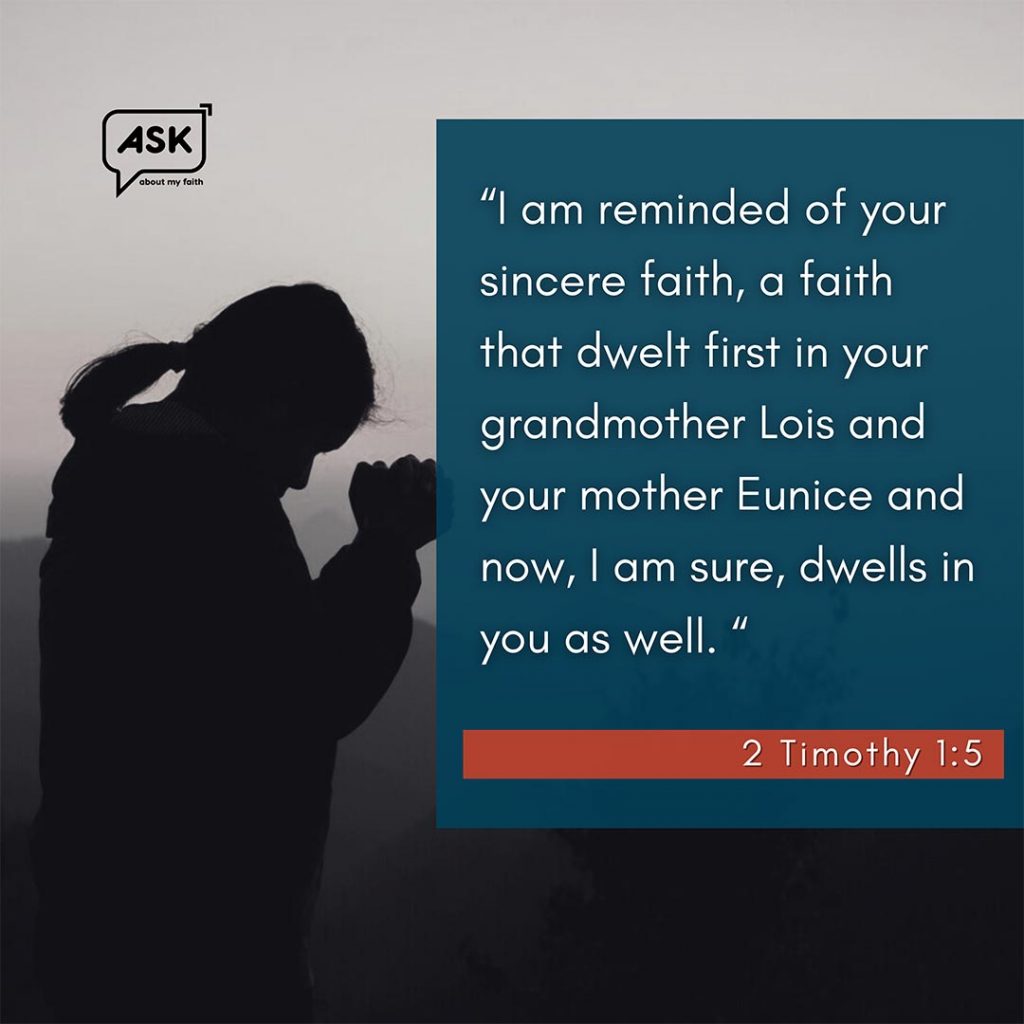
“I am reminded of your sincere faith, which first lived in your grandmother Lois and in your mother Eunice and, I am persuaded, now lives in you also.” — 2 Timothy 1:5, NIV
Paul traces Timothy’s faith through three generations of women. Eunice and Lois are not prominent figures in the New Testament. They are mentioned once. But the entire trajectory of one of Paul’s most trusted ministry partners begins with a grandmother and a mother who passed their faith down carefully. The most significant thing some mothers ever do, Scripture suggests, is invisible — carried in the hearts of their children long after they are gone.
Practical Application: Name the woman — mother, grandmother, or otherwise — through whom your faith was first transmitted. Write her a letter today, whether she can receive it or not.
3. 30+ Mother’s Day Bible Verses — My Personal Treasury
Verses That Describe a Mother’s Love
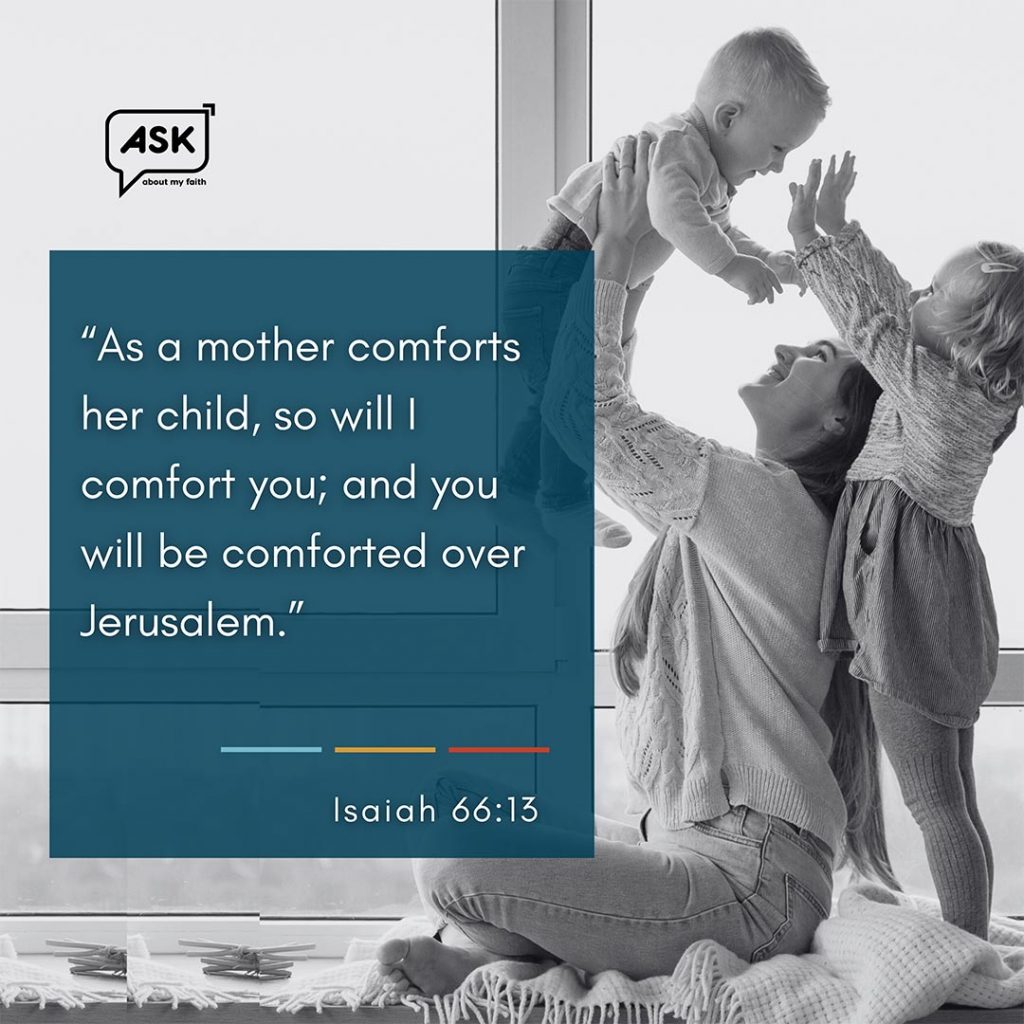
“As a mother comforts her child, so will I comfort you; and you will be comforted over Jerusalem.” — Isaiah 66:13, NIV
God uses a mother’s comfort as the closest comparison to his own. My mother had a specific way of putting her hand on the back of my head when I was upset — not saying anything, just the weight of her hand. I believed in the comfort of God more easily because I had experienced that gesture. What your mother gave you was never separate from what God was showing you about himself.
Practice It: Let yourself receive comfort today — from God, from a person, from this verse — the same way a child receives it. Without explaining why you need it.
“Can a mother forget the baby at her breast and have no compassion on the child she has borne? Though she may forget, I will not forget you!” — Isaiah 49:15, NIV
God uses the most unthinkable maternal failure — a mother forgetting her nursing infant — as the measure of his own reliability. Even if that impossible thing happened, God says, I would not forget you. The verse is built on the foundation of a mother’s love and then goes beyond it. This is theological argument from the greatest to the even-greater.
Practice It: Write your name in the margin next to this verse. Let “I will not forget you” be addressed to you, personally, today.
“She watches over the affairs of her household and does not eat the bread of idleness.” — Proverbs 31:27, NIV
My mother managed a household, a part-time job, and three children on a modest income, and she did it without complaint or calculation. I did not understand the cost of that until I was doing the same. Proverbs 31:27 is not a standard. It is a tribute. The woman described here is being honoured, not audited.
Practice It: Name one specific, practical thing your mother did consistently that you only fully appreciated in hindsight. Speak it aloud today as an act of honour.
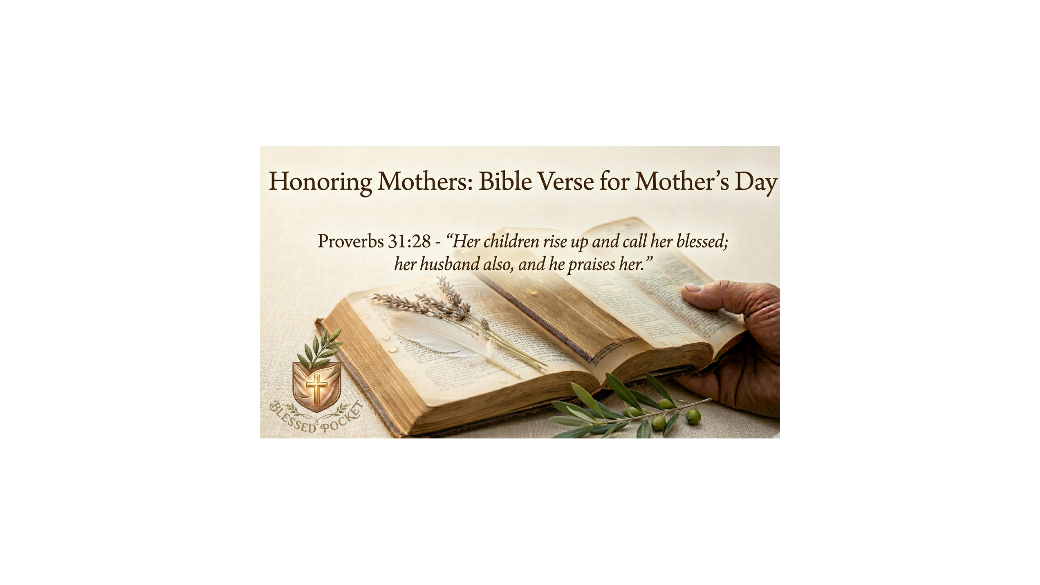
“Her children arise and call her blessed; her husband also, and he praises her.” — Proverbs 31:28, NIV
The children arise. It is an active, deliberate act — to rise up and name someone blessed. Most of us have mothers we should have arisen for more often. It is not too late to arise, whether she is still here or only in memory.
Practice It: Tell your mother — in person, in writing, or in prayer if she has gone — exactly what you are grateful for. Do not wait for the perfect moment.
Verses for Mothers Who Are Weary
“She is clothed with strength and dignity; she can laugh at the days to come.” — Proverbs 31:25, NIV
The laughter here is not denial. It is the settled confidence of someone whose security is not based on knowing every outcome. This is the most honest kind of strength — not the absence of exhaustion, but the presence of a deeper root beneath it.
Practice It: If you are a weary mother today, read this verse as a declaration over yourself. Not “I feel this way” — but “this is what I am clothed with, whether I feel it or not.”
“Come to me, all you who are weary and burdened, and I will give you rest.” — Matthew 11:28, NIV
Motherhood is heavy. Nobody who has done it seriously disputes this. Jesus does not say “work harder.” He says “come.” The invitation is not performance-based. It is presence-based. You come as you are, weary as you are, and rest is what you receive.
Practice It: Find ten minutes today to sit in stillness — not to pray productively, not to plan. Just to come and rest. Let that be enough.
“The Lord is close to the brokenhearted and saves those who are crushed in spirit.” — Psalm 34:18, NIV
Some mothers carry private griefs that never make it into conversation — prodigal children, lost pregnancies, strained relationships, the particular loneliness of loving someone who does not love you back the way you hoped. This verse was not written for the triumphant. It was written for the crushed.
Practice It: If you are carrying a grief related to your children today, name it honestly in prayer. God is specifically close to where the crushing is happening.
“He gives strength to the weary and increases the power of the weak.” — Isaiah 40:29, NIV
The promise is not “he gives strength to the strong who ask for more.” It is the weary — the ones who have reached their limit — who receive it. The weakness is not an obstacle to the promise. It is the qualifying condition.
Practice It: On the days when you have nothing left, pray Isaiah 40:29 as a specific request. Name what you are depleted of. Let the promise be specific.
Verses of Blessing for Mothers
“Blessed is she who has believed that the Lord would fulfil his promises to her.” — Luke 1:45, NIV
Elizabeth speaks this over Mary — one woman pronouncing blessing over another, in the presence of the One they are both carrying. This blessing is not about achievement. It is about belief. The ground of the blessing is faith, not performance.
Practice It: Find a mother in your life this week and speak a specific blessing over her — not a compliment, a blessing. Name what God is doing in and through her. Let your words be deliberate.
“May the Lord bless you from Zion; may you see the prosperity of Jerusalem all the days of your life. May you live to see your children’s children.” — Psalm 128:5-6, NIV
The vision of the blessed life in the Psalms includes living long enough to see your children’s children. This is agricultural, generational, rooted blessing — the kind that travels through time. For every grandmother reading this, it is a specific and tender promise.
Practice It: Pray Psalm 128 over your household on Mother’s Day. Let it paint the picture of what you are building toward.
“The Lord your God is with you, the Mighty Warrior who saves. He will take great delight in you; in his love he will no longer rebuke you, but will rejoice over you with singing.” — Zephaniah 3:17, NIV
God singing over you. Not evaluating you, not scoring your performance, not noting your failures — singing. Let this image sit with every mother who has wondered whether she is doing enough. The God who knows every moment of your mothering responds to you with a song.
Practice It: Let yourself receive this verse without immediately deflecting it. God is singing. Sit still long enough to hear it.
Verses for Those Honouring a Mother Gone Too Soon
“She is more precious than rubies; nothing you desire can compare with her.” — Proverbs 3:15, NIV
I cannot read this verse without thinking of my mother’s hands — the specific way they moved when she was cooking, the way they looked in her last months. The preciousness Proverbs describes is not abstract. It is specific, sensory, irreplaceable. If you have lost your mother, the particular quality of her presence — the things about her that cannot be replicated — is exactly what this verse is reaching for.
Practice It: Name one specific, irreplaceable thing about your mother — a gesture, a phrase, a habit — and write it down before it fades further from memory.
“Precious in the sight of the Lord is the death of his faithful servants.” — Psalm 116:15, NIV
The word “precious” here is yakar (H3368) — weighty, rare, of great value. God does not regard the death of those he loves lightly. This verse has carried me through more than one Mother’s Day. It is not consolation-prize theology. It is a declaration that the one you are grieving mattered to God as specifically and personally as they mattered to you.
Practice It: If your mother has died, pray this verse over her memory today. Let God’s valuing of her be the word over the grief.
“He will wipe every tear from their eyes. There will be no more death or mourning or crying or pain.” — Revelation 21:4, NIV
Mother’s Day grief is real. This verse does not ask you to pretend it is not. It asks you to hold it alongside a promise that this is not the permanent condition of things. Grief and hope are not opposites in Scripture. They are travelling companions on the way to a morning that will not have this shadow in it.
Practice It: Let yourself cry if you need to today. Then read Revelation 21:4 into the aftermath of it. Both things can be true at once.
Verses for New Mothers and Expectant Mothers
“For you created my inmost being; you knit me together in my mother’s womb.” — Psalm 139:13, NIV
Every child a mother holds is someone God has been knitting since before she knew. The word saka — to knit together — is precise and careful. What came through her was not accidental or mechanical. It was made with attention.
Practice It: If you are a new mother or expectant mother, read Psalm 139:13-16 over the child you are carrying or holding. Let those words be the first theology spoken over their life.
“Before I formed you in the womb I knew you.” — Jeremiah 1:5, NIV
God knew the child before the mother did. Before the pregnancy test, before the first heartbeat detectable on a monitor, before the first moment of awareness — God knew. Motherhood, in Scripture, participates in something God began before it arrived at your door.
Practice It: Pray this verse over each of your children today by name. Let the knowledge that God knew them first become the foundation under your love for them.
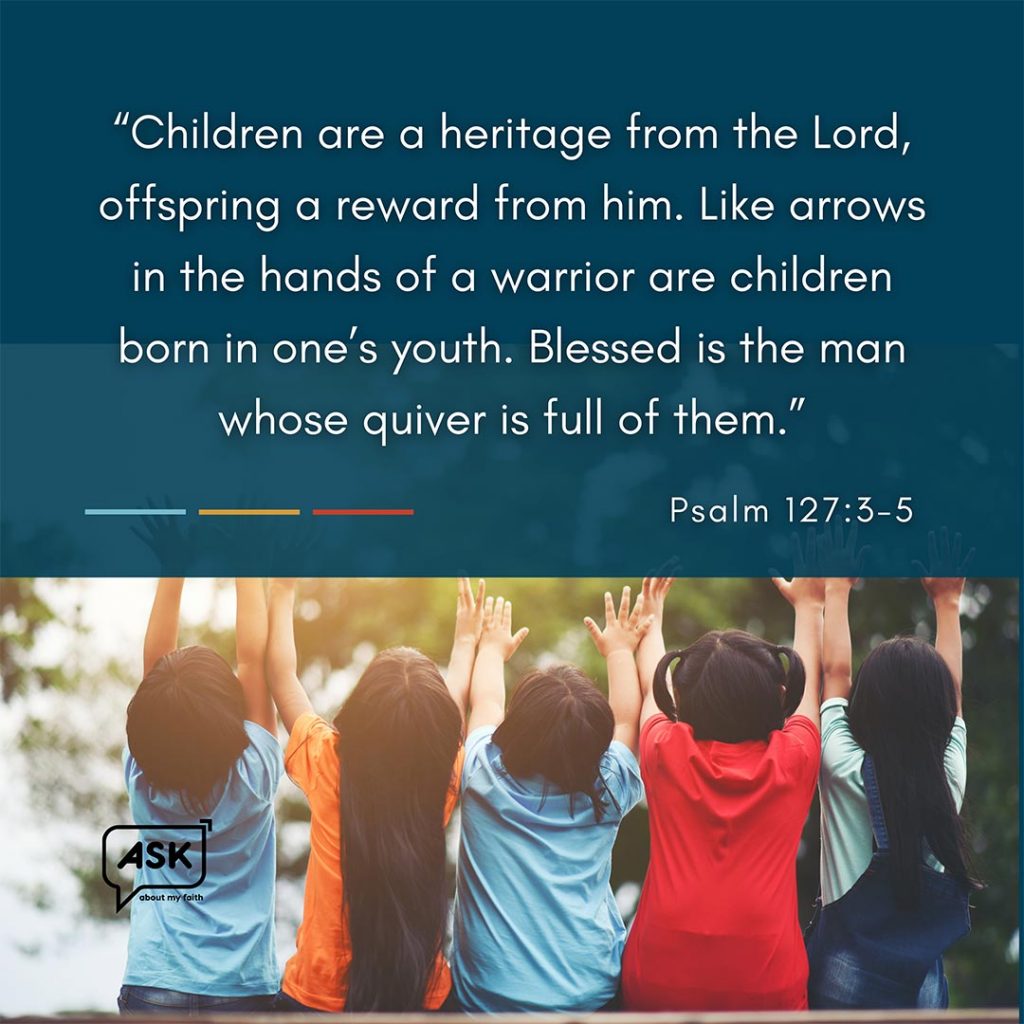
“Sons are a heritage from the Lord, children a reward from him.” — Psalm 127:3, NIV
The word nachalah (H5159) — heritage or inheritance — is the same word used for the land God gives to Israel. Children in Scripture are not possessions, not achievements, not accessories to a life plan. They are an inheritance — something God entrusts, something with its own weight and its own destiny.
Practice It: Look at your children today — or at a photograph if they are grown — and receive them consciously as a gift entrusted to you, not a product of your effort.
Verses on Generational Faith Through Mothers
“I have been reminded of your sincere faith, which first lived in your grandmother Lois and in your mother Eunice.” — 2 Timothy 1:5, NIV
Timothy’s faith had a female genealogy. Two women, named and honoured, through whom a whole ministry trajectory began. Most of the mothers who have shaped history in the kingdom of God are unknown to us — remembered only by the faith of their children and grandchildren.
Practice It: Trace the women through whom your faith was transmitted — by blood or by spiritual influence. Name them. Thank God for them specifically.
“Train up a child in the way he should go; even when he is old he will not depart from it.” — Proverbs 22:6, ESV
I have met people in their seventies and eighties who returned to the faith their mothers planted in them in childhood — after decades of distance, after everything else had failed them. The training Proverbs describes is not indoctrination. It is the patient shaping of a path. Long-term. Faithful. Trusting the God of the harvest to bring up what was sown.
Practice It: If you have a prodigal child, plant Proverbs 22:6 as an anchor in your daily prayer. The sowing and the harvest are on different timelines and both are real.
4. The Hidden Truth Most Mother’s Day Teaching Skips
Mother’s Day Is Complicated — and the Bible Knows It
Most Mother’s Day sermons and devotionals are built for one kind of experience: the grateful adult child with a living, loving mother. But the pews on Mother’s Day are full of people for whom this Sunday is the hardest of the year — women who have lost children, women who have lost mothers, women who longed to be mothers and are not, adults with mothers who wounded them, mothers of prodigals, mothers in the middle of complicated relationships with their own children.
The Bible is not built for the easy version only. Hannah weeps. Rachel dies in childbirth. Naomi buries her sons. Rizpah sits beside the bodies of her children to keep the birds away, all night, for weeks (2 Samuel 21:10) — one of the most raw acts of maternal grief in all of Scripture. The Bible does not sanitise motherhood. It holds the full weight of it.
What most teaching skips is this: the Scriptures do not require you to have a Hallmark experience to find yourself in the text. If your Mother’s Day is full of grief, the grief is biblical. If it is full of complicated feelings, the complication is biblical. If it is full of joy and gratitude, that is biblical too. The text is large enough for all of it.
God Images Himself as a Mother — and We Rarely Preach It
The theological gap most significant in this topic is the consistent and intentional use of maternal imagery for God in both Testaments — and how rarely it is preached. Isaiah 66:13 directly compares God’s comfort to a mother’s comfort. Isaiah 49:15 uses a nursing mother as the measure of divine faithfulness. Numbers 11:12 has God describing himself as the one who carries Israel as a nursing mother carries an infant. Hosea 11:3-4 pictures God teaching Ephraim to walk, lifting them up and feeding them — the language of a parent with a toddler.
The BibleProject’s work on the character of God traces this maternal thread through the prophets as a deliberate theological move — God choosing maternal language not to soften his image but to complete it. The fullness of the divine character requires both the paternal and the maternal. A Christianity that only speaks of God as Father is missing half the language God himself used to describe himself.
This matters for Mother’s Day specifically because it means that every act of genuine maternal love — the tenderness, the sacrifice, the ferocious protection, the comfort offered to a crying child — is a reflection of the divine image. Mothers are not imitating God’s love. God’s love is, in part, imitating theirs.
Honour Is a Command, Not a Feeling
One more truth that most teaching skips: the fifth commandment to honour your mother is not conditioned on having a mother who makes honour easy. Honour is a command, and commands in Scripture are addressed to situations where the thing commanded does not come naturally.
This does not mean pretending abuse was acceptable, or that reconciliation is always possible or safe. It means that the work of finding what honour looks like in your specific, complex situation is a real and legitimate spiritual task — not a sign that something is wrong with your faith, but evidence that you are taking both the commandment and your reality seriously.
I have counselled enough people through complicated maternal relationships to know that the simplest version of the fifth commandment is not always available. But I have also watched people find, with great patience and prayer, forms of honour that were honest and real — even in the hardest circumstances. The commandment is worth wrestling with. God never gave it expecting it to be universally easy.
5. Frequently Asked Questions [FAQS]
What does the Bible say about mothers on Mother’s Day?
The Bible does not mention Mother’s Day specifically — it is a modern observance — but it contains some of the most sustained and beautiful theology of motherhood available in any ancient text. The fifth commandment establishes honouring your mother as one of the foundational acts of a life well-lived. Proverbs 31 offers an extended poem of tribute to a woman of strength and dignity. Paul traces Timothy’s faith through his mother and grandmother. Jesus provides for his mother from the cross. And God himself uses the imagery of maternal love to describe his own compassion. Mother’s Day is, from a biblical perspective, an occasion to act on what Scripture already commands: to arise, to call her blessed, to speak honour where it is due.
Supporting verse:“Her children arise and call her blessed.” — Proverbs 31:28, NIV
Practical takeaway: Choose one specific thing your mother has done for you and tell her about it today — or write it down as an act of honour if she is no longer here.
What is the most powerful Bible verse for Mother’s Day?
Different verses speak most powerfully depending on the kind of Mother’s Day someone is having. For gratitude and celebration, Proverbs 31:25-28 is the most comprehensive tribute. For those who are grieving a lost mother, Psalm 116:15 offers the deepest comfort — “Precious in the sight of the Lord is the death of his faithful servants.” For mothers who are weary, Isaiah 40:29 is the most direct promise. For anyone who questions whether they are loved enough, Isaiah 49:15 — where God says he will not forget you even if a nursing mother could forget her child — is perhaps the most overwhelming verse in the Bible on the subject.
Supporting verse:“Can a mother forget the baby at her breast… Though she may forget, I will not forget you!” — Isaiah 49:15, NIV
Practical takeaway: Find the verse on this list that speaks most directly to where you are today and return to it three times before the day is over.
What does the Bible say about honouring your mother?
The Bible’s most direct instruction to honour your mother is the fifth commandment in Exodus 20:12 — the first commandment with a promise attached, according to Paul in Ephesians 6:2-3. The promise is that things will go well and life will be long. Jesus reinforces this commandment in Mark 7:10-13, condemning the religious practice that allowed people to dedicate their resources to God as an excuse to withhold support from their parents. In Proverbs 23:22, the instruction is to “listen to your father who gave you life, and do not despise your mother when she is old.” Honour in Scripture is not only an emotion. It is a pattern of attention, care, and practical action that acknowledges the weight of what was given.
Supporting verse:“Honour your father and your mother, so that you may live long in the land the Lord your God is giving you.” — Exodus 20:12, NIV
Practical takeaway: Identify one specific and practical act of honour you can extend to your mother this week — a phone call, a visit, a meal, financial support. Let the act be the honour.
Are there Bible verses for Mother’s Day when your mother has died?
Scripture speaks directly and tenderly to grief, and Mother’s Day grief specifically finds its voice in several passages. Psalm 116:15 declares that death of those God loves is precious — weighty and significant — to him. Revelation 21:4 promises that every tear, including the ones cried on this particular Sunday, will be wiped away in the final chapter. John 11:35 — “Jesus wept” — gives us the simplest and most direct evidence that grief in the presence of death is not a lack of faith. It is a reflection of the love that was real. The one who comforts in Isaiah 66:13 as a mother comforts her child is the same one who receives the grief of that child when the mother is gone.
Supporting verse:“He will wipe every tear from their eyes. There will be no more death or mourning or crying or pain.” — Revelation 21:4, NIV
Practical takeaway: If you are grieving today, give yourself permission to grieve fully. Then read Isaiah 66:13 and let God speak into the place your mother used to fill.
What Bible verses encourage mothers who feel like they are failing?
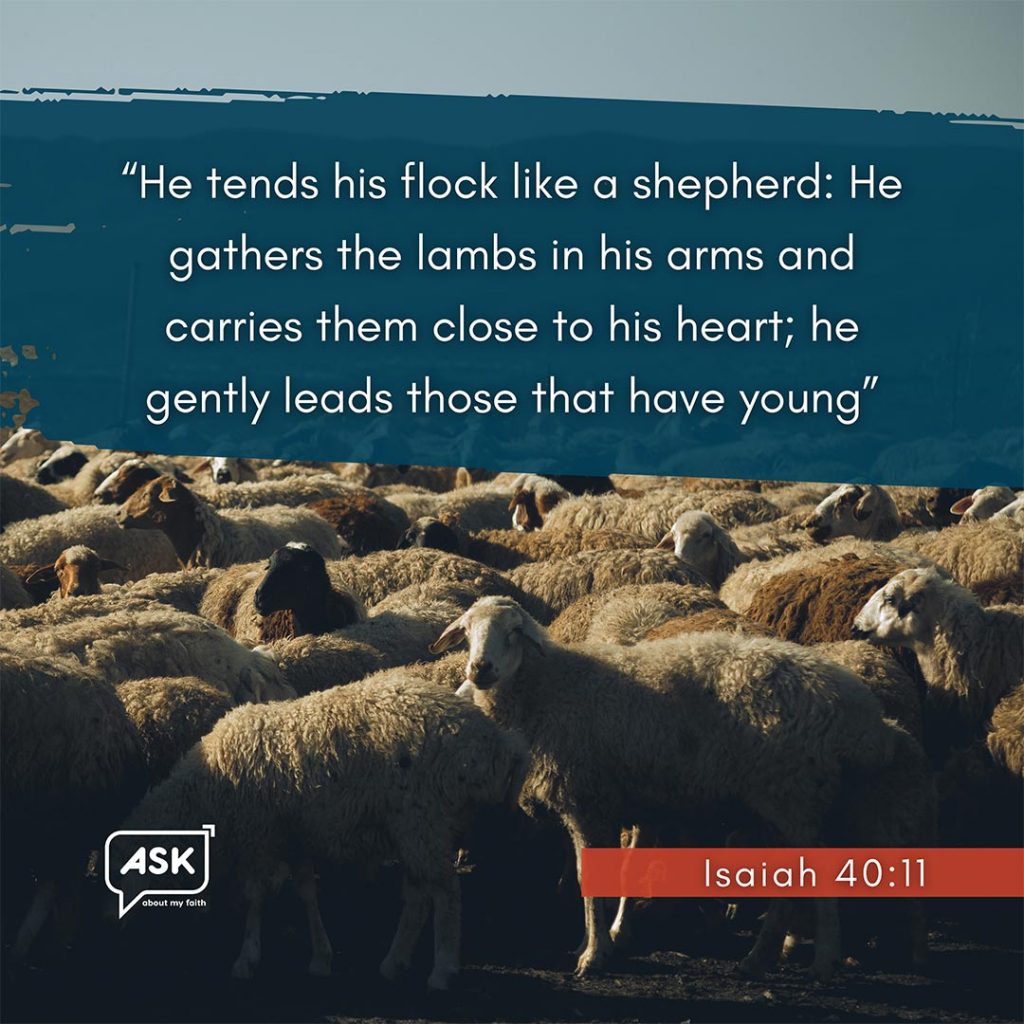
Every mother I have ever known has felt at some point like she is not doing enough, not being enough, or missing something essential. Scripture does not offer productivity advice in response to this feeling. It offers a different kind of grounding. Lamentations 3:22-23 reminds us that God’s mercies are new every morning — the slate is reset daily, which means yesterday’s failures do not define today. Isaiah 40:11 describes God as one who “gathers the lambs in his arms and carries them close to his heart; he gently leads those that have young.” The promise of gentle leading is specific to mothers. Psalm 121:8 promises that God will watch over your coming and going — and the coming and going of the children in your care.
Supporting verse:“He gently leads those that have young.” — Isaiah 40:11, NIV
Practical takeaway: Write Isaiah 40:11 somewhere you will see it on the hard mornings. You are being led gently, not audited harshly.
What does the Bible say about a mother’s prayers for her children?
A mother’s intercession for her children runs through Scripture as one of its most consistent and powerful themes. Hannah’s prayer for Samuel is one of the most extended prayer narratives in the Old Testament — and it resulted in one of Israel’s greatest leaders. The Syrophoenician woman’s fierce, persistent prayer for her daughter (Matthew 15:21-28) earns a direct commendation from Jesus for its faith. Monica, the mother of Augustine (referenced in early church history), prayed for her son’s conversion for seventeen years before it happened. The Bible does not present a timeline guarantee for a mother’s prayers. It presents a God who hears them, remembers them, and works through them over timeframes that exceed a mother’s lifetime.
Supporting verse:“In her deep anguish Hannah prayed to the Lord, weeping bitterly.” — 1 Samuel 1:10, NIV
Practical takeaway: Pray specifically for each of your children today by name — their specific needs, their specific struggles, their specific destinies. A mother’s prayer is one of the most powerful things in Scripture.
Is there a Bible verse about becoming like a mother to others?
The New Testament explicitly applies maternal love beyond biology. Paul describes his apostolic care in maternal terms in 1 Thessalonians 2:7 — “We were like a nursing mother caring for her own children.” In Romans 16:13, Paul greets Rufus and his mother “who has been a mother to me also.” Naomi’s relationship with Ruth becomes one of the most tender non-biological mother-child bonds in Scripture. The church, at its best, is full of women who mother people who did not come from their bodies — who nurture, teach, protect, and carry others in the labour-like way Paul describes in Galatians 4:19.
Supporting verse:“We were like a nursing mother caring for her own children.” — 1 Thessalonians 2:7, NIV
Practical takeaway: If you are not a biological mother, consider who in your life you are mothering in this broader sense — and receive that calling today as something Scripture fully honours.
6. Mother’s Day Prayers
A Prayer of Gratitude for a Living Mother
Lord,
I do not say this enough, so I am saying it now: thank you for her. Thank you for the specific and irreplaceable way she has been present in my life — her particular laugh, her particular way of caring, the things she gave me that I only recognised years later as gifts.
Let me arise today, as Proverbs says, and call her blessed — not in my head but out loud, to her face or in her hearing. Let me not wait until she is gone to find the words.
I ask for your blessing over her today. Let her feel seen, honoured, and deeply loved — by me, and by the God who made her.
Amen.
A Prayer for a Grieving Mother
Father,
She is carrying something on this day that no one fully sees. A grief that does not have a public name, or one that has become so familiar others assume it has eased. It has not.
Come close to her today as you promised — close to the brokenhearted, near to the crushed in spirit. Let her feel your presence in the specific shape of her loss. Let Isaiah 66:13 be real to her today — that the comfort she is longing for is exactly the comfort you give.
Hold what she is holding. Be what she needs, in the way only you can be.
Amen.
A Prayer for a Weary Mother
God,
She is tired in the specific way that mothers get tired — not just physically, but in the place where the giving comes from. She has poured out more than she knew she had, again, and she is not sure there is enough left for tomorrow.
I bring Isaiah 40:29 to you on her behalf — you give strength to the weary, power to the weak. She is both. She is qualified for this promise.
Let her rest today in whatever form rest is possible. Let her feel gently led, not harshly judged. Let her know that the tenderness she extends every day is something you see, and something you honour.
Amen.
A Prayer for Those Who Long to Be Mothers
Lord,
Today is complicated for her in a way that most people around her do not understand. She carries a longing that has no simple resolution — for a child she has not been able to have, or has lost, or is still waiting for.
Be with her in the specific shape of that longing. Let Hannah’s prayer be her prayer — honest, desperate, unashamed before you. And let your closeness today be real, whether or not the answer comes in the form she hopes for.
You see her. You know this ache. You are not unmoved by it.
Amen.
A Prayer of Blessing Over All Mothers
Father,
Bless every mother reading this today — the new ones who are overwhelmed, the seasoned ones who are tired, the ones whose children have grown and left, the ones whose children have walked away from faith, the ones celebrating, the ones grieving.
You called yourself a mother to your people. You chose maternal language to describe your own heart. That means every act of genuine maternal love in the world is a reflection of your image.
Let every mother today feel the weight of that honour — and let every child, of any age, find a way to say what needs to be said before it is too late to say it.
Amen.
Conclusion
Mother’s Day is not one thing. It is not a Hallmark card and it is not a grief that silences everything else. For most of us, it is something in between — and the Bible, with its remarkable honesty, holds all of it without flinching.
The God who describes his own tenderness in the language of a mother — who calls himself the one who comforts as a mother comforts, who carries like a mother carries, who does not forget like a mother cannot forget a nursing infant — that God is not absent from the complicated Sundays. He is most present in them.
Honour your mother where you can. Grieve where you must. Receive comfort where it is offered. And know that every maternal love you have ever given or received is, at its root, a reflection of the One who invented it.
Eden Pen is a storyteller passionate about spreading positivity. As a contributor to Blessed Pocket, she crafts heartfelt content designed to encourage, inspire, and brighten your day, one word at a time.
Eden Pen
<a href="https://blessedpocket.com">Eden Pen</a> is a storyteller passionate about spreading positivity. As a contributor to Blessed Pocket, she crafts heartfelt content designed to encourage, inspire, and brighten your day, one word at a time.