My grandfather never opened a Bible in my presence. He was not that kind of man.
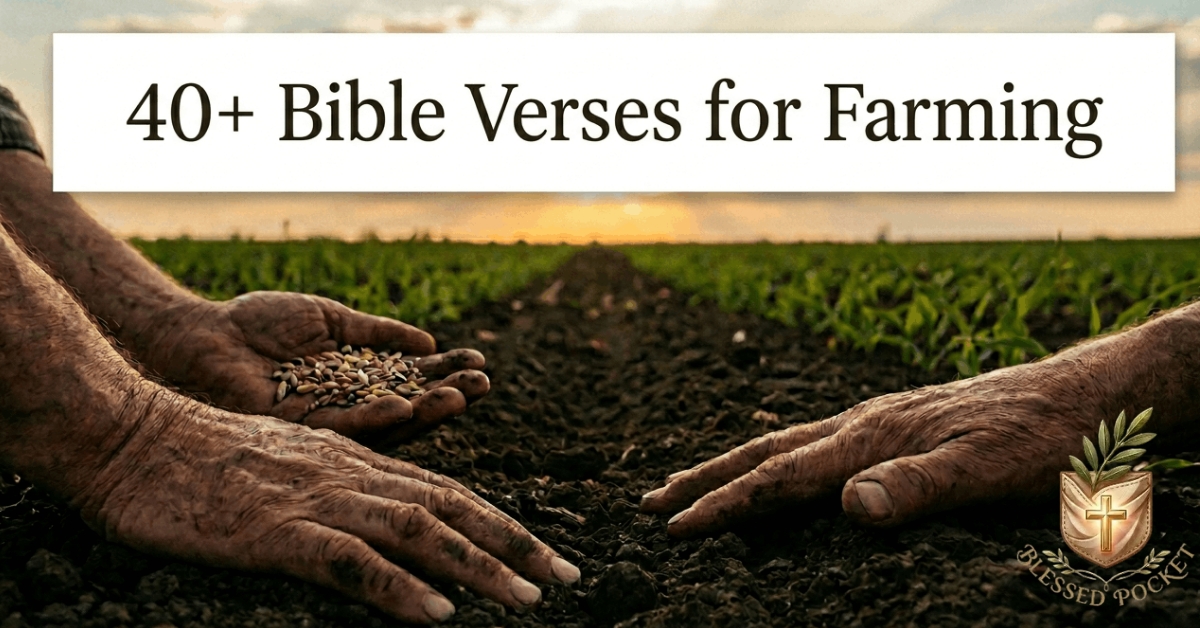
What he did do, every single morning without exception, was walk his fields before breakfast. I was seven years old the first summer I was allowed to go with him. I remember the dew soaking through my trainers before we had gone thirty yards. I remember the smell of turned earth after rain — that specific, ancient smell that I have never been able to name precisely, though I have tried a hundred times. I remember his hands. Rough as bark. Permanently stained with something between clay and memory.
He never said much on those walks. He would stop at a row of beans, crouch down, push two fingers into the soil, and look at whatever came back up on his fingertips. Then he would stand, look at the sky for a long moment, and keep walking. I did not understand until I was much older that what I was watching was a man in conversation. Not with me. With whoever made the soil and the sky and whatever passes between them.
He died when I was twenty-six. By that point I was in ministry, writing sermons, studying Greek, and considering myself theologically equipped. Standing at his graveside in November, looking out over his fields gone brown and bare, I realised I had never once brought a Bible verse about farming to the man who had shaped me most.
That failure became a hunger. I spent the following years going back through Scripture looking for every farmer, every field, every harvest, every drought. What I found changed the way I preach, the way I pray, and the way I remember him.
What follows is what I found.
1. The Biblical Meaning of Farming and the Land
Farming in the Bible is not an incidental occupation. It is the original human vocation. Before anything else in human history, God placed a human being in a garden and told him to tend it.
The Hebrew Roots of Farming
The Hebrew word for the ground from which Adam was made is adamah (Strong’s H127) — the same root as adam, the word for man. Human identity and agricultural ground are linguistically inseparable in the Hebrew Bible. You cannot understand what it means to be human in the Old Testament without understanding that humanity is, at its root, a creature of the soil.
The word for farming work is abad (H5647), meaning to serve, to till, to work. It is the same word used for priestly service and for worshipping God. When God places the man in the garden le’abdah — to work it — the word used is an act of sacred service. Tilling the ground and serving God are, in the Hebrew mind, the same verb.
Karmel (H3760) refers to a garden land or fruitful field — a cultivated, flourishing place. It appears in prophetic visions of what God’s restored creation will look like. The most beautiful future the prophets can imagine is a karmel — a well-farmed, abundantly fruitful landscape that mirrors Eden.
The Greek Dimension of Farming
The New Testament word georgos (Strong’s G1092) means a farmer or vine-dresser — literally, one who works the earth. It appears in several of Jesus’s most important parables, and notably in John 15:1 where God the Father himself is called the georgos — the farmer, the one who tends the vine. God does not merely own the farm. He works it.
Speiro (G4687) — to sow — appears throughout the Gospels and letters. Paul uses it to explain resurrection (1 Corinthians 15:36-37), to describe generosity (2 Corinthians 9:6), and to frame the moral life itself (Galatians 6:7-8). Sowing is one of the New Testament’s most load-bearing metaphors because it is drawn from one of humanity’s most foundational physical realities.
Karpos (G2590) — fruit — appears over fifty times in the New Testament. It is the word for the outcome of agricultural labour, spiritual growth, acts of righteousness, and the evidence of the Holy Spirit’s work in a life. Fruit, in the Greek New Testament, is the single word that unites farming, faith, and character.
From Old Covenant Shadow to New Covenant Substance
In the Old Testament, the land was covenant. When Israel obeyed, the land produced. When Israel turned away, the land went dry. The connection was explicit, personal, and agricultural. The rains came or withheld based on the condition of the people’s hearts (Deuteronomy 11:13-17). The land was not neutral ground. It was a participant in the covenant.
In the New Testament, Jesus does not abandon farming language. He multiplies it. Every parable about seeds and soil and harvest is built on the assumption that his listeners know, in their bodies and their hands, exactly what he means. The Parable of the Sower is not an illustration chosen for effect. It is a truth best told in agricultural language because it is, at its core, about the condition of ground — and every farmer in his audience already understood that the most important variable in any crop is the quality of the soil that receives it.
When I finally understood this — really understood it, not just as a preacher’s observation but as a personal conviction — I stopped apologising for spending time in my garden. It became one of my primary places of prayer.
2. Every Type of Farming Truth in Scripture
The Farmer as God’s Steward
“The Lord God took the man and put him in the Garden of Eden to work it and take care of it.” — Genesis 2:15, NIV
This verse stopped me completely the first time I read it after my grandfather’s death. He had done exactly this — worked and cared for the same ground for sixty years. He had been living the first human vocation without ever having been told its name.
Practical Application: Let every act of care on your land — weeding, watering, tending — become a conscious act of obedience to the oldest command given to human hands.
The Farmer’s Dependence on God
“He covers the sky with clouds; he supplies the earth with rain and makes grass grow on the hills.” — Psalm 147:8, NIV
No farmer I have ever known believes they are fully in control. The weather refuses it. The soil refuses it. I think this dependence is built into farming intentionally — it is one of the most reliable daily schoolrooms in human helplessness and divine provision.
Practical Application: On the next day you check a weather forecast with anxiety, say this verse first and let the forecast come second.
The Farmer’s Patience and the Harvest
“Be patient, then, brothers and sisters, until the Lord’s coming. See how the farmer waits for the land to yield its valuable crop, patiently waiting for the autumn and spring rains.” — James 5:7, NIV
James does not use the farmer as a minor illustration. He uses the farmer as the model of the kind of patience God asks his people to have. The farmer does not dig up the seed to check it. He does not demand the harvest on his own schedule. He waits because he knows the ground is doing something he cannot see or rush.
Practical Application: Name the thing you are waiting for. Write James 5:7 next to it. Leave both on your desk for a week.
The Farmer’s Reward for Hard Work
“The hardworking farmer should be the first to receive a share of the crops.” — 2 Timothy 2:6, NIV
Paul writes this to Timothy in the context of enduring hardship. He uses the farmer as one of three examples — alongside a soldier and an athlete — of someone whose effort and discipline produce a real reward. Farming in the Bible is never romanticised as easy. It is honoured as hard, and the hardness is part of its dignity.
Practical Application: On a day when the work is exhausting and the results are invisible, read this verse and let it be God’s personal acknowledgement of what your hands are doing.
The Fruit of Faithful Labour
“A generous person will prosper; whoever refreshes others will be refreshed.” — Proverbs 11:25, NIV
The agricultural logic underneath this proverb is deliberate. The person who holds their seed to protect it loses. The person who sows it generously reaps a harvest. Generosity in Scripture follows farming logic: you cannot keep your way to abundance. You have to give your way there.
Practical Application: Find one person connected to your land or community this week and give something — time, produce, help — without calculating the return.
The Land and God’s Faithfulness
“As long as the earth endures, seedtime and harvest, cold and heat, summer and winter, day and night will never cease.” — Genesis 8:22, NIV
God spoke this covenant over the earth after the flood. Seedtime and harvest are not seasonal inconveniences. They are covenant promises. The rhythm of the agricultural year is God’s faithfulness made structural. Every spring that comes after winter is a kept promise.
Practical Application: At the start of each planting season, read this verse aloud over your land. Let it be the foundation under your work.
3. 40+ Bible Verses for Farming — My Personal Treasury
When the Harvest Is Uncertain
“Sow your seed in the morning, and at evening let your hands not be idle, for you do not know which will succeed, whether this or that, or whether both will do equally well.” — Ecclesiastes 11:6, NIV
After a failed growing season one year, I nearly stopped planting. This verse found me at exactly the right moment. The preacher does not offer certainty. He offers better counsel: keep sowing, morning and evening, and leave the outcome to the One who manages the soil.
Practice It: On days when the outcome feels hopeless, do one small act of planting — literal or figurative — and release the result.
“Let us not become weary in doing good, for at the proper time we will reap a harvest if we do not give up.” — Galatians 6:9, NIV
The Greek word for “proper time” here is kairos — the appointed, right moment. Not our timetable. God’s. Paul is making an agricultural promise: if you keep tilling and keep sowing, harvest will come at the appointed time. The only way to miss it is to stop.
Practice It: Write “kairos — the proper time” in your journal beside the thing you are most tempted to abandon.
“As the rain and the snow come down from heaven, and do not return to it without watering the earth and making it bud and flourish… so is my word that goes out from my mouth.” — Isaiah 55:10-11, NIV
God uses the hydrological cycle as a picture of his own faithfulness. Rain falls, soaks deep, feeds roots invisibly for weeks or months before anything appears above ground. His promises work the same way. What looks like nothing happening underground is often the most important part of the whole process.
Practice It: On a rainy day, stand in it for sixty seconds and let it be a physical reminder that invisible work is being done in your life right now.
“He who goes out weeping, carrying seed to sow, will return with songs of joy, carrying sheaves with him.” — Psalm 126:6, NIV
I have wept over fields. I imagine most farmers have. The image of a man sowing while weeping is one of the most honest pictures of faith in all of Scripture — doing the right thing while feeling the opposite of hope, trusting the ground because there is nothing else left to trust.
Practice It: If you are in a weeping season right now, keep sowing anyway. Let this verse be the permission you need.
“Whoever watches the wind will not plant; whoever looks at the clouds will not reap.” — Ecclesiastes 11:4, NIV
The farmer who waits for perfect conditions never farms. This is one of the most practical verses in the Bible and one of the most spiritually honest. Perfect conditions are not coming. The ground is waiting now.
Practice It: Identify one thing you have been waiting for the right conditions to start. Begin it today, imperfect conditions and all.
When You Need God’s Provision
“He makes grass grow for the cattle, and plants for people to cultivate — bringing forth food from the earth.” — Psalm 104:14, NIV
Every meal I have ever eaten began in soil. This verse refuses to let me take that for granted. God is actively, continuously in the business of making things grow. The supply chain of creation is a supply chain of grace.
Practice It: Before your next meal, trace one ingredient back to its origin in the earth. Let that tracing be your grace.
“The Lord will open the heavens, the storehouse of his bounty, to send rain on your land in season and to bless all the work of your hands.” — Deuteronomy 28:12, NIV
The storehouses of heaven. God keeps rain in reserve. He releases it in season, to specific land, for specific people. When I first understood that rain is a deliberate act of God’s provision rather than a random meteorological event, it changed how I talked to him about the weather.
Practice It: Pray specifically for rain this week — not just “bless my farm” but the actual water your land needs, from the one who stores it.
“The Lord will indeed give what is good, and our land will yield its harvest.” — Psalm 85:12, NIV
Short, direct, and completely counter to how a bad season feels. I memorised this verse after two consecutive difficult years on the smallholding and repeated it every morning through the third year. The land yielded. It always does, eventually, for the one whose hope is correctly placed.
Practice It: Memorise this verse this week and say it each morning before you go out to the land.
“Honour the Lord with your wealth, with the firstfruits of all your crops; then your barns will be filled to overflowing.” — Proverbs 3:9-10, NIV
The principle of firstfruits is agricultural in origin and financial in application. You give the first portion — before you know the final total, before the season is fully counted — as an act of trust that the God who started the harvest will finish it.
Practice It: The next time you bring in any harvest — of any kind — give the first portion away before you count what remains.
“I am the vine; you are the branches. If you remain in me and I in you, you will bear much fruit.” — John 15:5, NIV
Jesus calls the Father a georgos — a farmer — and himself a vine, and his people the branches. This is not metaphor chosen for decoration. It is the most accurate description Jesus could find for what the life of faith actually looks and feels like: organically connected, dependent, fruitful only because of what flows through the main stock.
Practice It: Spend five minutes today simply remaining — not striving, not producing. Just connected. Let the vine do what vines do.
When the Land Is Dry or the Season Is Hard
“If my people, who are called by my name, will humble themselves and pray and seek my face and turn from their wicked ways, then I will hear from heaven, and I will forgive their sin and will heal their land.” — 2 Chronicles 7:14, NIV
This promise is addressed to a farming nation facing drought. God connects the condition of the land to the condition of his people’s hearts. The remedy for a dry land begins with humility, not irrigation. I do not apply this mechanically — but I have noticed that the seasons when I have turned most deliberately toward God are also the seasons when the ground has seemed most alive.
Practice It: Pray this verse specifically over your land today. Begin with the humility part, not the healing part.
“Though the fig tree does not bud and there are no grapes on the vines, though the olive crop fails and the fields produce no food… yet I will rejoice in the Lord.” — Habakkuk 3:17-18, NIV
Habakkuk is standing in a field of total failure and choosing praise. This is the most difficult spiritual instruction in the farming sections of Scripture — and perhaps the most important. It is not denial. It is not pretending the drought is not real. It is the decision to locate your joy somewhere the drought cannot reach.
Practice It: In your worst season, write Habakkuk 3:17-18 on something you can see from the field. Let it be your anchor.
“Be still before the Lord and wait patiently for him; do not fret when people succeed in their ways, when they carry out their wicked schemes.” — Psalm 37:7, NIV
I have stood in a field beside a neighbour’s field that looked far better than mine, and felt something that I am not proud of. This verse speaks directly to that moment. The farmer’s comparison trap is real. The Psalmist’s answer is stillness and patience — not because the gap is not real, but because the measure of your harvest is not your neighbour’s yield.
Practice It: The next time you compare your land or your season to someone else’s, say this verse out loud and then go back to your own work.
“Cast your bread upon the waters, for after many days you will find it again.” — Ecclesiastes 11:1, NIV
Ancient farming practice involved sowing seed in flooded fields — a counterintuitive, risky act that required trust in a process longer than one season. The preacher commends this kind of long-haul, apparently wasteful generosity as the wisest agricultural and spiritual strategy available.
Practice It: Do one thing this week that feels like casting bread on water — generous, uncertain, and patient.
Verses for Morning Work on the Land
“The Lord’s lovingkindnesses indeed never cease, for his compassions never fail. They are new every morning; great is your faithfulness.” — Lamentations 3:22-23, NASB
The author writes this from the wreckage of a destroyed city, looking at a morning sky, finding faithfulness in the simple fact that the day began. Every farmer who has ever walked out before sunrise into whatever condition the land is in has access to this same evidence. The morning came. God kept going. So can I.
Practice It: Tomorrow morning, before any task, stand outside for sixty seconds and receive the morning as an act of faithfulness.
“In the morning, Lord, you hear my voice; in the morning I lay my requests before you and wait expectantly.” — Psalm 5:3, NIV
The Psalmist establishes morning prayer as a discipline, not a mood. It is not “I pray when I feel like it.” It is “in the morning” — every morning, as regularly as the sun. The farmer who makes this a habit will find that the rhythm of the land and the rhythm of prayer begin to feel like the same rhythm.
Practice It: For the next seven mornings, say one sentence to God before you do anything else. It does not need to be beautiful. It needs to be first.
“Commit to the Lord whatever you do, and he will establish your plans.” — Proverbs 16:3, NIV
The word “commit” in Hebrew is galal (H1556) — to roll, to transfer the weight of a thing onto something else. When you commit the day’s work to God, you are rolling the weight of its outcome off your shoulders and onto his. This is not passive. It is the most active kind of trust.
Practice It: Before your first task each morning, say: “Lord, I roll the weight of this day’s work onto you.” Then go to work free.
Verses on the Spiritual Harvest
“The harvest is plentiful but the workers are few. Ask the Lord of the harvest, therefore, to send out workers into his harvest field.” — Matthew 9:37-38, NIV
Jesus says this while walking through towns and villages, looking at people the way a farmer looks at a field ready to cut — with urgency and with grief at what might be lost. He uses harvest language because harvest has a deadline. There is a moment when the grain is ready. If you wait too long, you lose it.
Practice It: Pray today for one person in your life who seems ready to hear something from God. Ask God to send the right worker — and consider that it might be you.
“Do not be deceived: God cannot be mocked. A man reaps what he sows.” — Galatians 6:7, NIV
This is farming used as moral law. The ground is honest. It returns what it was given, amplified. No one plants weeds and expects wheat. The choices we sow into our lives, our relationships, our habits — they come up as what they are, not as what we wished they would become.
Practice It: Ask yourself honestly today: what am I actually sowing? Not what I intend to sow. What am I actually putting in the ground?
“Still other seed fell on good soil, where it produced a crop — a hundred, sixty or thirty times what was sown.” — Matthew 13:8, NIV
The Parable of the Sower is the most important farming parable in Scripture, and Jesus explains it himself. The seed is the same. The difference is entirely in the quality of the soil. The single most important question for any person who wants to bear fruit is not “what am I doing?” but “what condition is my ground in?”
Practice It: Ask God to show you the condition of your soil. Then spend ten minutes in silence letting the answer come.
Verses for Gratitude at Harvest
“You care for the land and water it; you enrich it abundantly. The streams of God are filled with water to provide the people with grain, for so you have ordained it.” — Psalm 65:9, NIV
Psalm 65 is one of the most beautiful harvest thanksgivings in Scripture. It describes God personally tending the land — watering it, enriching it, filling its streams. God is not an absentee landlord. He is working the ground alongside the farmer.
Practice It: Read all of Psalm 65 outdoors during harvest season. Let it be your annual harvest prayer of thanksgiving.
“He who supplies seed to the sower and bread for food will also supply and increase your store of seed and will enlarge the harvest of your righteousness.” — 2 Corinthians 9:10, NIV
Paul writes this in the context of generous giving, but he uses agricultural language deliberately. The God who makes farming physically possible is the same God who makes spiritual fruitfulness possible — and he is not stingy with either.
Practice It: At harvest, before you count what you have kept, count what you have given. Let the giving be part of the harvest report.
“The earth is the Lord’s, and everything in it.” — Psalm 24:1, NIV
Short. Final. Foundational. The land I farm does not ultimately belong to me. Whatever I produce on it is produced on someone else’s ground, with someone else’s rain, in someone else’s sun. This is not a diminishment. It is a liberation. I am a tenant doing meaningful work on the most generous landlord’s estate in existence.
Practice It: Walk your boundary lines this week and say at each corner: “This is the Lord’s, and I am grateful to work it.”
Verses About God’s Blessing on the Work
“May the Lord bless you from Zion; may you see the prosperity of Jerusalem all the days of your life. May you live to see your children’s children — peace be on Israel.” — Psalm 128:5-6, NIV
The preceding verses of Psalm 128 describe a man who fears God, works with his hands, and sees his family flourish around his table. This is the vision of the blessed farming life in Scripture — not wealth in the abstract, but fruitfulness, family, table, and peace passed to the next generation.
Practice It: Pray Psalm 128 over your household this week. Let it paint the picture of what you are farming toward.
“Blessed are all who fear the Lord, who walk in obedience to him. You will eat the fruit of your labour; blessings and prosperity will be yours.” — Psalm 128:1-2, NIV
“You will eat the fruit of your labour.” This is a promise of connection between faithfulness and reward — not guaranteed wealth, but the deep satisfaction of eating what you have grown in ground you have tended with integrity. It is one of the most human and most beautiful blessings in the Psalms.
Practice It: The next meal you eat from your own produce, eat it slowly. Taste the connection between your obedience and your table.
“A faithful person will be richly blessed.” — Proverbs 28:20, NIV
Practice It: Identify the area of your farming life where you rely most entirely on your own judgment. Bring it to God in prayer this week as an act of submission.
Paul writes this from prison, not a farm — which makes it more credible, not less. He is not speaking from abundance. He is speaking from a place of involuntary simplicity about a God who provides even there. Whatever a farming season does not produce, this promise addresses.
Practice It: Write your current unmet need on a piece of paper. Write this verse beneath it. Fold it and keep it in your work coat pocket for the season.
Verses for the Long Years of Farming
“I have been young, and now am old; yet I have not seen the righteous forsaken or their children begging bread.” — Psalm 37:25, ESV
The perspective of an old man looking back over decades of lived faith and not finding one instance of divine abandonment. This is the testimony that sustains farming families across generations — the slow, undramatic, year-by-year reliability of a God who does not forget who is working his land.
Practice It: Ask an older farmer or an older Christian in your community to tell you their testimony of God’s provision across many years. Then write it down.
“One generation commends your works to another; they tell of your mighty acts.” — Psalm 145:4, NIV
The farming family is one of the most powerful containers for generational faith. My grandfather handed me something on those early-morning field walks that no seminary could have given me. What are you handing the generation behind you?
Practice It: Tell one younger person in your life one specific story of God’s provision in a farming season. Not a principle. A story.
4. The Hidden Truth Most Teaching Skips About Farming and Faith
The Ground Was Cursed — But the Vocation Was Not
Most Christians who know Genesis know that the ground was cursed after the fall. “Cursed is the ground because of you; through painful toil you will eat food from it all the days of your life” (Genesis 3:17, NIV). What most teaching stops short of saying is this: the vocation of farming was not cursed. Only the ease of it was.
Adam was a farmer before the fall. God gave him the garden to tend before anything went wrong. The work was the calling. The thorns and thistles are the consequence of sin, not farming itself. This distinction matters enormously. It means that every farmer labouring in hard ground is not living in the curse. They are living the original calling in harder conditions than God designed. The hard ground is honest testimony to what sin costs. But the hands in the soil are still doing the first thing God asked a human being to do.
When I understood this, I stopped feeling that farming was a spiritual compromise — a practical necessity that kept me from more important spiritual work. It is the oldest spiritual work. It just comes with thorns now.
The Sabbath Was Given to the Land First
Most people think of the Sabbath as a human rest. What is almost never taught is that the Mosaic law gave the land its own Sabbath. Every seventh year, the fields were to lie fallow — no planting, no harvesting, no organised cultivation (Leviticus 25:1-7). The land needed rest. God commanded it not because the farming economy needed a reset, but because the land itself was in covenant with him, and covenant partners get rest.
The BibleProject’s work on the Sabbath traces this agricultural dimension of the fourth commandment and shows how the land-Sabbath was connected to Israel’s identity as people who trusted God’s provision over their own management. A people who could not let the land rest had, at some level, stopped believing that God would provide without their continuous effort.
I have tried, in a modest way, to apply this to my own garden. One bed left fallow each year. Not because I have a theological obligation under Mosaic law — I do not — but because it is a physical act of trust. The ground can rest. I can rest. Neither of us is the source.
Farming and the New Creation
N.T. Wright argues consistently that the biblical vision of the future is not souls floating in a spiritual realm but renewed creation — physical, agricultural, material. The vision in Isaiah 65:21 is of people building houses and planting vineyards and eating the fruit of their own labour in a renewed world. Revelation closes with a city that contains a river and a tree bearing twelve crops of fruit, one for each month. The story of Scripture begins in a garden, passes through a farm, and ends in a garden-city where the agricultural cycle continues without curse, without drought, without failure.
Every farmer who has ever looked at their land and thought “this is closer to what I was made for than anything else I do” was, I believe, feeling the pull of that final harvest. The longing is legitimate. The ground you work right now is a prototype of something coming that will take your breath away.
5. Frequently Asked Questions {FAQS}
Does God care about farming?
God cares about farming more deeply than most Christian teaching suggests. From Genesis 2, where he personally plants a garden and places a human being in it with the specific vocation of tending it, to the agricultural parables of Jesus, to the vision of the new creation where people plant vineyards and eat their fruit — farming is not peripheral to God’s story. It is woven through the centre of it. The Mosaic law devotes extensive legislation to land management, crop cycles, gleaning rights for the poor, and land Sabbath. God gave Israel not just moral law but agricultural law, because the condition of the land and the condition of the people’s relationship with him were inseparable. Any farmer who has ever felt that their work was too ordinary to matter to God has been deceived by a version of Christianity that never read the Old Testament carefully enough.
Supporting verse:“The Lord God took the man and put him in the Garden of Eden to work it and take care of it.” — Genesis 2:15, NIV
Practical takeaway: Read Leviticus 25 this week as a farming document, not a historical curiosity. Notice how carefully God legislates the land’s wellbeing.
What does the Bible say about working hard on a farm?
The Bible has enormous respect for agricultural labour and never romanticises it as easy. Proverbs 14:23 says that “all hard work brings a profit.” 2 Timothy 2:6 singles out the farmer as a model of disciplined effort — “the hardworking farmer should be the first to receive a share of the crops.” The Psalms celebrate eating “the fruit of your labour” (Psalm 128:2) as a specific divine blessing. The New Testament uses farming as a model for endurance in ministry (1 Corinthians 9:10-11), for the moral life (Galatians 6:7-9), and for the relationship between sowing generously and reaping generously (2 Corinthians 9:6). Farming in the Bible is never just a livelihood. It is a language God uses to describe the most important truths about how effort, time, patience, and faithfulness produce results that no shortcut can replicate.
Supporting verse:“The hardworking farmer should be the first to receive a share of the crops.” — 2 Timothy 2:6, NIV
Practical takeaway: On a hard day when the work feels invisible and unacknowledged, read 2 Timothy 2:6 as God’s direct acknowledgement of what you are doing.
What does the Bible say about trusting God with your harvest?
Trusting God with a harvest requires the specific kind of faith that only farmers and gardeners and parents fully understand — the faith that releases what you have worked hard to grow and trusts the outcome to someone larger. Proverbs 3:5-6 calls for trust with “all your heart” and submission in “all your ways” — not just the spiritual parts, but the agricultural parts too. Psalm 126:5-6 frames the entire farming life as a movement from weeping-while-sowing to singing-while-reaping — with no guarantee of the timeline between the two, only the assurance that the movement is real. The farmer who brings his seed, his soil, his drought, and his harvest to God in specific, concrete prayer will find that the Scriptures were always written with his hands and his anxieties in view.
Supporting verse:“He who goes out weeping, carrying seed to sow, will return with songs of joy, carrying sheaves with him.” — Psalm 126:6, NIV
Practical takeaway: This week, pray over your specific harvest — name the crop, the field, the need — and leave it with God with the same deliberateness you would leave a seed in the ground.
Is farming a calling from God?
The biblical evidence is that farming is not merely a profession. It is one of the oldest divine callings given to a human being. Genesis 2:15 establishes it before the fall, before sin, before religion in any formal sense — as the original meaningful work God designed for human hands. The prophet Micah’s vision of the good future is “every man under his own vine and under his own fig tree” (Micah 4:4) — personal, agricultural, unhurried, and at peace. Isaiah’s vision of the restored creation includes specific agricultural work (Isaiah 65:21-22). Paul compares the work of ministry directly to farming (1 Corinthians 9:10-11), suggesting that the farmer’s labour is the model for all serious, faithful vocation. If you have felt drawn to the land — a pull that no amount of career counselling has been able to redirect — it may be worth treating that pull as something God put there.
Supporting verse:“They will plant vineyards and eat their fruit… my chosen ones will long enjoy the work of their hands.” — Isaiah 65:21-22, NIV
Practical takeaway: Treat your work on the land as a calling this week, not just a livelihood. Let that shift in frame change how you begin each morning.
What does the Parable of the Sower teach farmers specifically?
The Parable of the Sower (Matthew 13:1-23) is Jesus’s most extended agricultural teaching, and his own explanation of it reveals a depth that moves far beyond farming. The soil types — hard path, rocky ground, thorny ground, good soil — are not character judgements. They are descriptions of what different conditions produce, and conditions can change. The same person can be different soil in different seasons of life. What Jesus is asking is the farmer’s most important question: what is the condition of the ground that receives what I am being given? Hard ground needs breaking. Rocky ground needs clearing. Thorny ground needs weeding. Good soil — attentive, humble, receptive — produces thirty, sixty, a hundred times what was sown. No farmer reads this parable without recognising every soil type from their own fields.
Supporting verse:“Still other seed fell on good soil, where it produced a crop — a hundred, sixty or thirty times what was sown.” — Matthew 13:8, NIV
Practical takeaway: Read Matthew 13:1-23 slowly this week. Ask God to show you which soil type describes you in this current season — and what work needs doing.
How can farmers pray for their land?
Scripture models extremely specific, land-focused prayer. Solomon’s prayer at the dedication of the temple (2 Chronicles 6:26-31) explicitly asks God to hear prayers about drought, famine, locusts, and crop failure. Jeremiah 29:7 instructs the people of God to pray for the prosperity of the land they inhabit, because their wellbeing is bound up with it. The Psalms contain prayers for rain (Psalm 65:9-13), for harvest (Psalm 67:6), and for the land’s healing (Psalm 85:12). Farming prayer can be as specific as the land you stand on — naming the field, the crop, the current need, the specific anxiety, and the specific hope. God is not offended by agricultural specificity. He made the specific acre you are praying over.
Supporting verse:“You care for the land and water it; you enrich it abundantly.” — Psalm 65:9, NIV
Practical takeaway: Walk your land this week and pray over each section specifically — naming what grows there, what it needs, and what you are trusting God for.
What does Proverbs say about farming?
Proverbs contains some of the most practical and spiritually serious farming wisdom in Scripture. Proverbs 12:11 says that “those who work their land will have abundant food.” Proverbs 13:23 observes that “an unploughed field of the poor could yield much food, but injustice sweeps it away.” Proverbs 14:4 makes the unsentimental point that “where there are no oxen, the manger is empty, but from the strength of an ox come abundant harvests” — no work, no yield. Proverbs 20:4 warns that “sluggards do not plough in season; so at harvest time they look but find nothing.” And Proverbs 27:23-27 gives an extended charge to know the condition of your flocks and herds and land, because wealth is not permanent — land and its management are. Proverbs is the most practically agricultural of the wisdom books, and it has more to say to a working farmer than most pastoral resources ever will.
Supporting verse:“Be sure you know the condition of your flocks, give careful attention to your herds.” — Proverbs 27:23, NIV
Practical takeaway: Read Proverbs 27:23-27 as a business and stewardship plan for your farm. Then audit the condition of your land honestly.
6. Sample Prayers for Farmers and the Land
A Morning Prayer Before Going Out to the Land
Father,
Before I go out to the land today, I bring my hands to you. You made them for this work — to tend what you have made, to plant what only you can grow, to care for ground that ultimately belongs to you.
I do not know what this day will hold. Weather I did not plan for. Tasks that do not finish. Things that need more than I have. So I roll the weight of today’s work onto you, and I go out as a servant of the One who planted the first garden.
Make me faithful today. Not clever. Not lucky. Faithful. And let what I sow today grow in your time, not mine.
Amen.
A Prayer for Rain and Provision
Lord of the harvest,
You store the rain in your storehouses and release it in season. You made the covenant after the flood that seedtime and harvest would never cease. I am standing on that covenant today.
The land is dry. The forecast is uncertain. And I am coming to the One who manages the clouds, not the one who reads the radar. You know what this land needs better than I do. You watered Eden. You opened the heavens for Elijah. You make the spring rains come.
I ask for rain — literal rain, for this specific land, in this specific season. And I ask for the deeper provision only you can give: the faith to keep farming while I wait for it.
Amen.
A Prayer in a Season of Poor Harvest
Father,
The yield this year was not what I hoped. I am tired, and honestly I am a little afraid of what comes next. I have worked hard and the ground did not return what I put in.
Help me to hold Habakkuk’s prayer today — “yet I will rejoice in the Lord.” Not because the numbers work out. Not because I understand the season. But because you are the same God in a bad harvest as in a good one, and your faithfulness is not measured by my yield.
Remind me that the seed I sowed is not wasted. Remind me that unseen underground work is still work. And give me the courage to go back out tomorrow and plant again.
Amen.
A Prayer of Thanksgiving at Harvest
Lord,
It came in. You brought it in. The season that began in mud and uncertainty ended in something I can hold in my hands and eat at my table. Thank you.
Let me not rush past this moment into the next season’s planning. Let me sit with the harvest long enough to really receive it — as a gift from the one who covered the sky with clouds and watered the earth and made the grain grow on hills I could not reach.
I bring you the firstfruits of this harvest, in whatever form I am able. Take it as a declaration that I know where it came from — and who it belongs to.
Amen.
A Prayer for Farming Families Across Generations
Father,
I think of the ones who worked this land before me and the ones who may work it after. I think of my grandfather, who walked his fields every morning in a conversation I only understood too late.
Bless farming families in every country and every climate — the ones facing drought, the ones facing debt, the ones whose children have left for the city, the ones who are the last of a line. Let them feel that the work of their hands is seen and honoured by the one who gave the original commission to tend the earth.
Let what we build on this land outlast us. Let the faith that grows here be passed to the generation behind us as surely as the seed.
Amen.
7. How I Actually Live These Truths Every Day
I want to be honest with you: I am not a full-time farmer. I am a pastor and writer with a large garden and a smallholding that keeps me humble. But everything I have written in this guide has been tested in my own hands and my own soil, not just at a desk.
My mornings begin outside. Before email, before the day’s agenda, before anything organised or productive — I spend five minutes in the garden. I look at what has grown overnight. I pull a weed or two. I put my hand in the soil and feel its temperature and moisture. This is not a spiritual exercise I read about in a book. It is something that developed organically over the three years since I planted my first serious vegetable bed, and it has changed my prayer life more than any other single habit.
I keep a planting journal that doubles as a spiritual log. Alongside the practical notes — what I planted, when, in which bed, and how it did — I record what I was praying about in that season and what God seemed to be teaching me. Reading it back over two or three years reveals patterns I would never have noticed otherwise: the years I was most anxious were the years I planted the least. The years I was most at peace were the years I took the most risks in the ground.
On Sundays I do not work the land — not out of rigid legalism, but because the one season I tried to ignore that rhythm, everything felt wrong. The land rested. I rested. It was not laziness. It was a kind of trust — the same trust the Sabbath year law was designed to cultivate in Israel. The ground will still be there on Monday. The God who manages it does not take a day off when I do.
I have started reading the agricultural Psalms outdoors. Psalm 65 at the start of growing season. Psalm 126 on difficult days. Psalm 128 over the family at harvest time. The words and the place speak to each other in ways they simply cannot do at a desk.
None of this is complicated or expensive. You do not need a farm. You need a pot of soil on a windowsill and the willingness to connect what you are doing with your hands to what God has been saying about hands in the soil since Genesis.
The ground is waiting. The seed is in your hand. The one who spoke light into darkness is the same one who speaks life into dark soil.
Go plant something.
Written by Muxamil
Conclusion
Farming and faith have always belonged to each other. Long before organised religion, long before written theology, there was a human being in a garden with their hands in the earth — placed there by God, given a vocation, and surrounded by a creation that was speaking about its Maker in every leaf and root and rainfall.
The Bible verses for farming gathered in this guide are not a collection of agricultural trivia. They are a sustained conversation that God has been holding with people who work the land for thousands of years. The same God who told Adam to tend the garden, who gave Israel rain in season and laws for the land’s Sabbath, who told his parables in fields and compared himself to both a farmer and a vine — that God sees your land, knows your season, and has not stopped speaking.
What I want to leave you with is not a technique or a theological system. It is a simple invitation: bring your land to God. Bring your specific field, your specific drought, your specific harvest, your specific fear about next year’s yield. He is not too grand for the particulars. He invented the particulars.
My grandfather never quoted Scripture over his fields. But those morning walks taught me more about faithful presence, patient labour, and quiet trust than any sermon I have written. I think he was farming the way God intended — hands in the earth, eyes on the sky, doing the work while trusting the One who makes things grow.
Eden Pen is a storyteller passionate about spreading positivity. As a contributor to Blessed Pocket, she crafts heartfelt content designed to encourage, inspire, and brighten your day, one word at a time.
Eden Pen
<a href="https://blessedpocket.com">Eden Pen</a> is a storyteller passionate about spreading positivity. As a contributor to Blessed Pocket, she crafts heartfelt content designed to encourage, inspire, and brighten your day, one word at a time.